This was physical evidence.
But the most important discovery came from an unexpected source:
A letter written by the photographer himself.
In correspondence recovered from archival collections, he described the session:
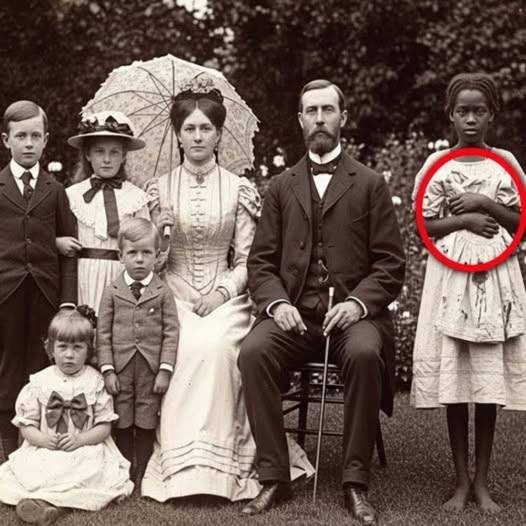
The family insisted the worker child be included—as a display of status.
He deliberately blurred her.
Minimized her presence.
Adjusted focus to reduce visibility.
And then wrote something investigators could not ignore:
“No one would look at that part of the image.”
He was wrong.
What Josefina did next transformed the photograph from propaganda into resistance.
She knew:
She would be placed at the edge
She would not be the subject
She would be ignored
But she also understood something extraordinary for an eight-year-old in that environment:
Images last.
So she brought the dress.
Held it tightly.