HomeHistory
Hidden in Plain Sight: Forensic Image Analysis Reveals a 19th-Century Hacienda Secret, Child Labor Death Records, and the Untold Evidence Buried in a Family Portrait
byStaff Contributor-April 06, 20260
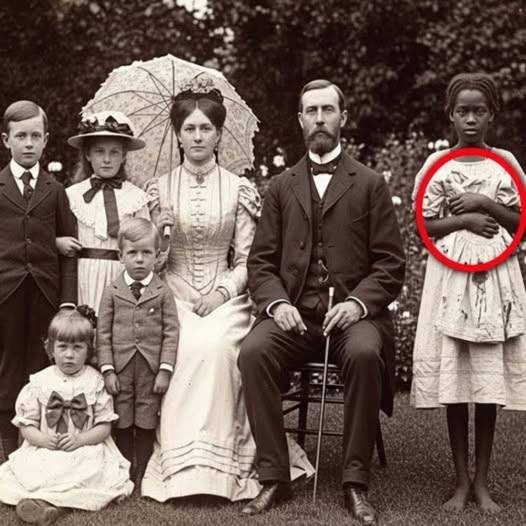
For more than a century, no one examined the right edge of the photograph closely enough.
It was cataloged as just another 19th-century hacienda family portrait—a typical archival image used in historical collections, genealogy research, and cultural documentation. Scholars referenced it when studying Porfirian-era Mexico, land ownership systems, and elite family structures.
But no one asked the most important question:
What was the girl at the edge of the frame holding?
That changed when a museum archivist applied high-resolution forensic image analysis, a technique now widely used in digital preservation, historical investigation, and visual evidence reconstruction.
What he found would not only reopen a forgotten story—it would expose hidden labor abuse, undocumented child deaths, and systemic exploitation embedded inside elite family imagery.
Ricardo Salazar had spent over two decades working in historical archives, museum curation, and photographic preservation at the Regional Museum of Guadalajara.
His job involved:
Cataloging 19th-century glass plate photography
Preserving wet collodion images
Digitizing fragile historical materials for long-term archival storage
Most discoveries in his field were incremental—names clarified, dates corrected, locations verified.
This one was different.