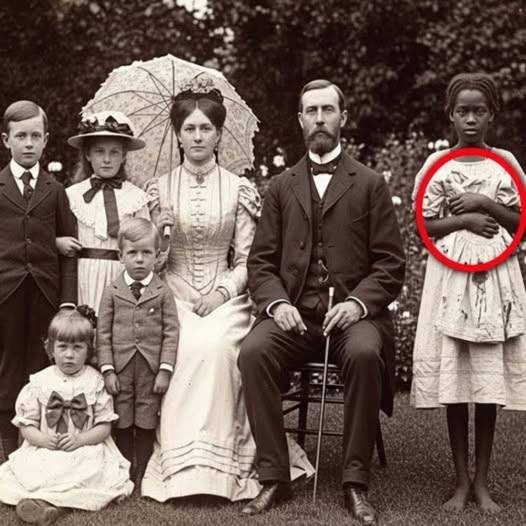
Positioned it within the frame.
And waited.
For more than a century, the system worked.
No one noticed.
Until digital analysis changed everything.
The discovery triggered a broader investigation into similar images across Mexico.
Researchers began identifying patterns:
Workers placed at edges of frames
Objects carried intentionally
Subtle signals embedded in portraits
These are now studied under a growing field of research sometimes described as:
hidden visual testimony within historical imagery
The photograph was later presented in an exhibition focused on:
Labor exploitation history
Afro-descendant communities in Mexico
Visual documentation of inequality
Attendance exceeded expectations.
Families came forward.
Descendants recognized names.
Oral histories matched archival findings.
One descendant brought written records passed through generations.
Inside was a line that reframed everything:
The girl knew the photograph would outlive them all.
That single insight explains the entire act.
She did not resist through words.
She resisted through evidence.
Today, the image is no longer classified as a simple portrait.
It is used in:
academic research on labor systems
forensic visual analysis case studies
historical documentation of child labor abuse
museum education programs
What makes this case significant is not just the tragedy.
It is the method.
A child, with no power, no protection, and no voice in her society, used the only available system—visual documentation—to preserve truth.
And more than 150 years later, that truth surfaced.
Not because it was obvious.
But because someone finally looked closely enough.
The photograph did not change.
The technology did.
The questions did.
The attention did.
And when they did, the meaning of the image changed permanently.
What was once a symbol of wealth became a record of suffering.