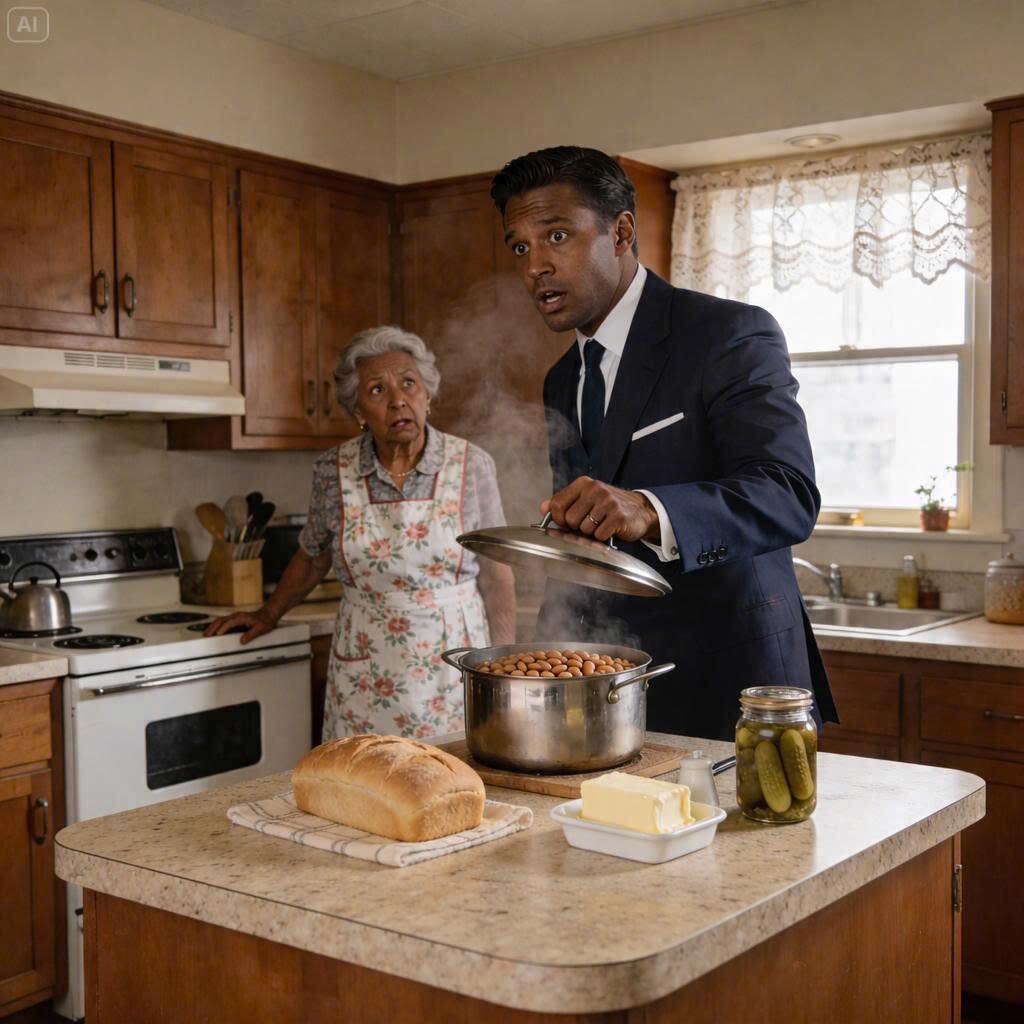
“She said that?”
You nod. “Many times.”
He turns away and puts both hands on the counter. Through the window above the sink, you can see the thin daylight of Christmas afternoon already beginning to dull. Somewhere on the street, a child laughs. A radio plays a carol from a distant house. Life keeps moving with indecent calm, even while yours is splitting in half.
Then Tomás says something that surprises you.
“Why didn’t you tell me?”
It is not accusation, not exactly. More like desperation. The question of a man trying to locate the exact minute he failed and maybe rewind toward it. You breathe in, out. The answer is older than either of you wants.
“Because mothers from my generation were trained to become smaller every year,” you say. “Because asking felt like begging. Because you sounded tired. Because your wife always spoke as if everything was under control. Because I kept thinking next month would be better.” You fold your hands in your lap. “And because I did not want to become a burden you discussed over dinner.”
He closes his eyes.
“Mamá…”
“It is not only your fault,” you say before he can drown in that. “But it is partly yours too. Money doesn’t excuse not looking with your own eyes.”
That lands, and it should.
He nods slowly, taking it like medicine that burns but heals cleaner than denial ever could. “You’re right,” he says. Then, with a bitter exhale, “I thought sending it was enough.”
You almost smile, though there is no joy in it. “Men always think the act of providing is the same as the act of caring. Sometimes it is. Sometimes it only makes them feel noble from far away.”
Your son lets out a shaky laugh at that, because if he doesn’t laugh he’ll start crying again and maybe never stop.
The front door opens ten minutes later.