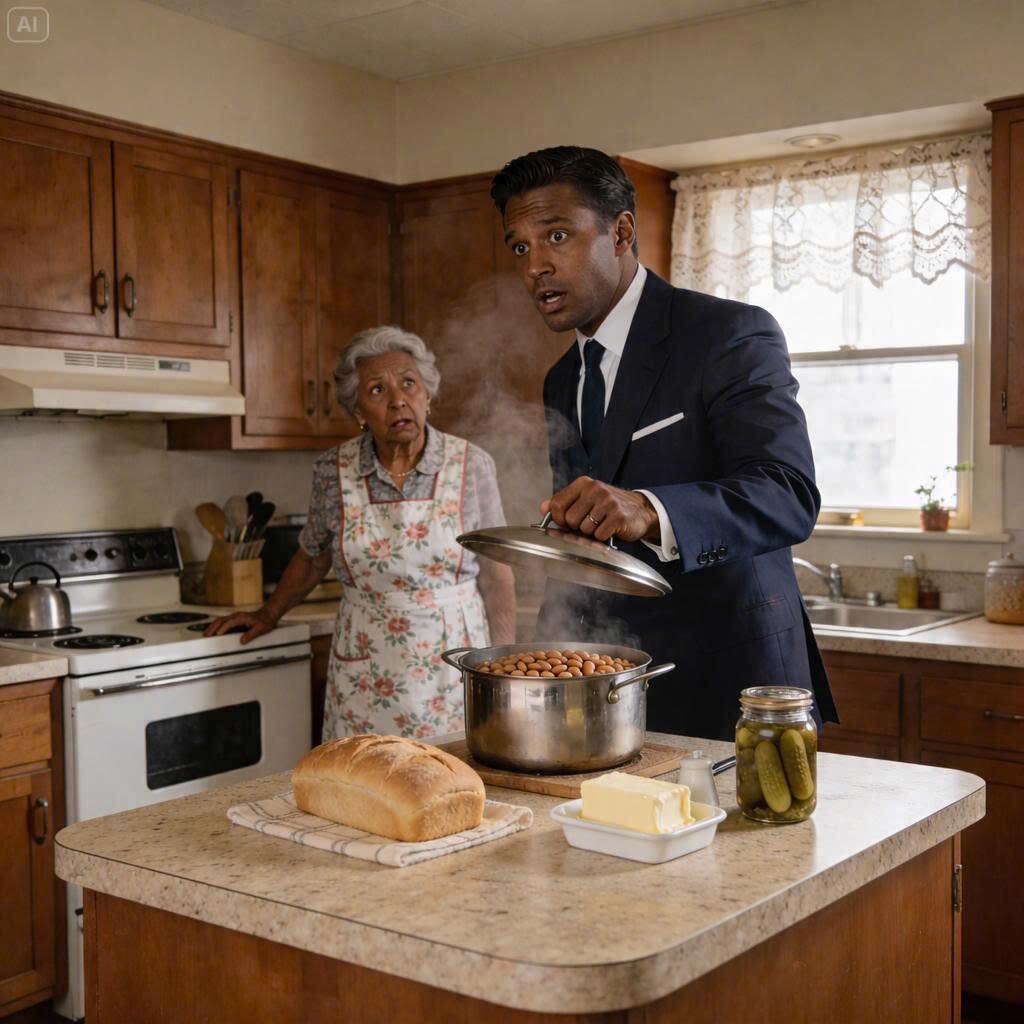
For one dangerous second, you think she will refuse. You think she will test whether the old power she has held over him—beauty, polish, performance, the soft weapon of appearing more reasonable than the person she’s hurting—can still work. But then she sees his face and understands something you already know.
He is not asking.
Verónica turns on her heel and leaves without another word. You hear her expensive boots strike the floor of the hall, then the murmur of her voice sharpen into false brightness as she calls for the children. A minute later, the front door opens and closes. The silence she leaves behind is so total it almost has weight.
Tomás doesn’t move.
Neither do you.
For a while the only sound is the soft bubble of the beans and the old refrigerator motor kicking in with a tired groan. The house feels smaller than ever and also somehow more honest. Like lies have mass, and removing one changes the shape of the air.
Then your son turns toward you.
He looks wrecked. Not because of the marriage yet, though that too is coming. He looks wrecked because whatever version of himself he has been using to survive his wealthy life just shattered in your kitchen, and beneath it is the boy who used to eat beans with tortillas at this very table and swear he’d take care of you when he grew up.
“Mamá,” he says, and his voice breaks on the second syllable.
That does it.
You did not cry when the church ladies handed you canned goods. You did not cry when you slept with the oven open after baking tortillas just to warm the house for ten extra minutes. You did not cry when your knees ached so badly you had to sit on the bed to pull your socks on with both hands. But your son standing in front of you looking twelve years old and thirty-eight at the same time? That opens the wound clean.
You sit down before your legs give out.
He drops to his knees beside your chair.