Outside, wind brushes softly against the repaired windows. Inside, warmth holds. That matters more than people with money understand. Warmth is not decoration. It is dignity. It is safety. It is the difference between enduring a life and inhabiting one.
“You don’t need to spend the rest of your life punishing yourself,” you tell him. “You need to spend it paying attention.”
He absorbs that the way he now absorbs most of your best sentences: like a man collecting tools instead of excuses.
Then he says, “I almost lost you while thinking I was taking care of you.”
You reach over and cover his hand with yours.
“No,” you say. “You almost lost yourself.” A beat passes. “You found your way back through my kitchen.”
His eyes fill again, but this time the tears do not look like shame alone. They look like gratitude too. Perhaps that is what real repentance becomes if it is allowed to stay long enough—less performance, more witness.
And sitting there with the steam from your coffee rising between you, you understand something that took an entire year of cold, hunger, betrayal, and truth to learn. The worst thing Verónica stole was never just the money. It was the illusion that love sent from far away automatically arrives where it is needed.
It doesn’t.
Somebody has to carry it with their own hands.
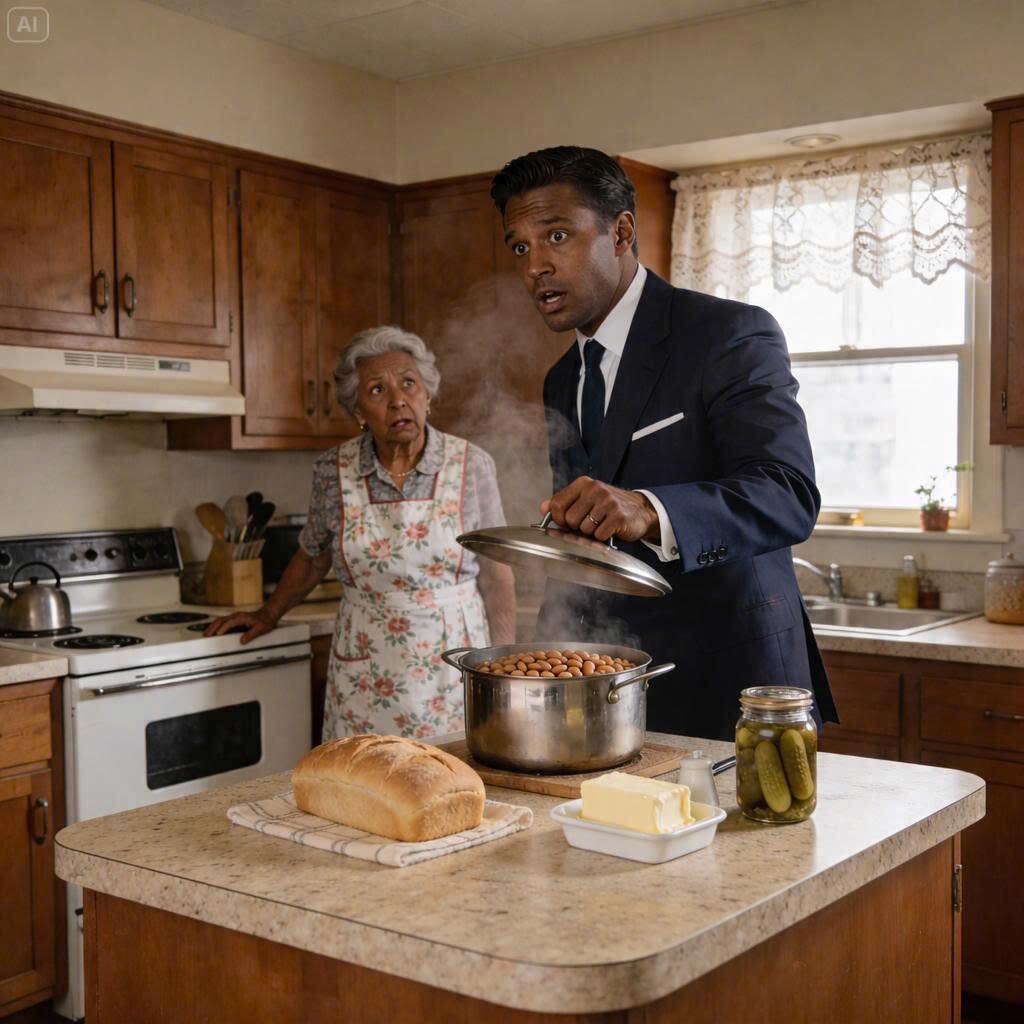
That is why the question that changed your life was never really about a pot of beans. Not even about the missing $3,000 a month. It was about the moment your millionaire son finally looked directly at your table, your walls, your winter, and saw the truth of what his absence had cost.
Everything changed right there.