The windows no longer whistle cold all night. The pantry is full. There is a proper heater by your bed. Your account receives a monthly deposit made directly, transparently, under your own name. Santiago and Mateo decorate a giant tree with crooked enthusiasm and insist on too many lights. Father Benito comes for dinner and brings buñuelos again, but this time as dessert, not rescue.
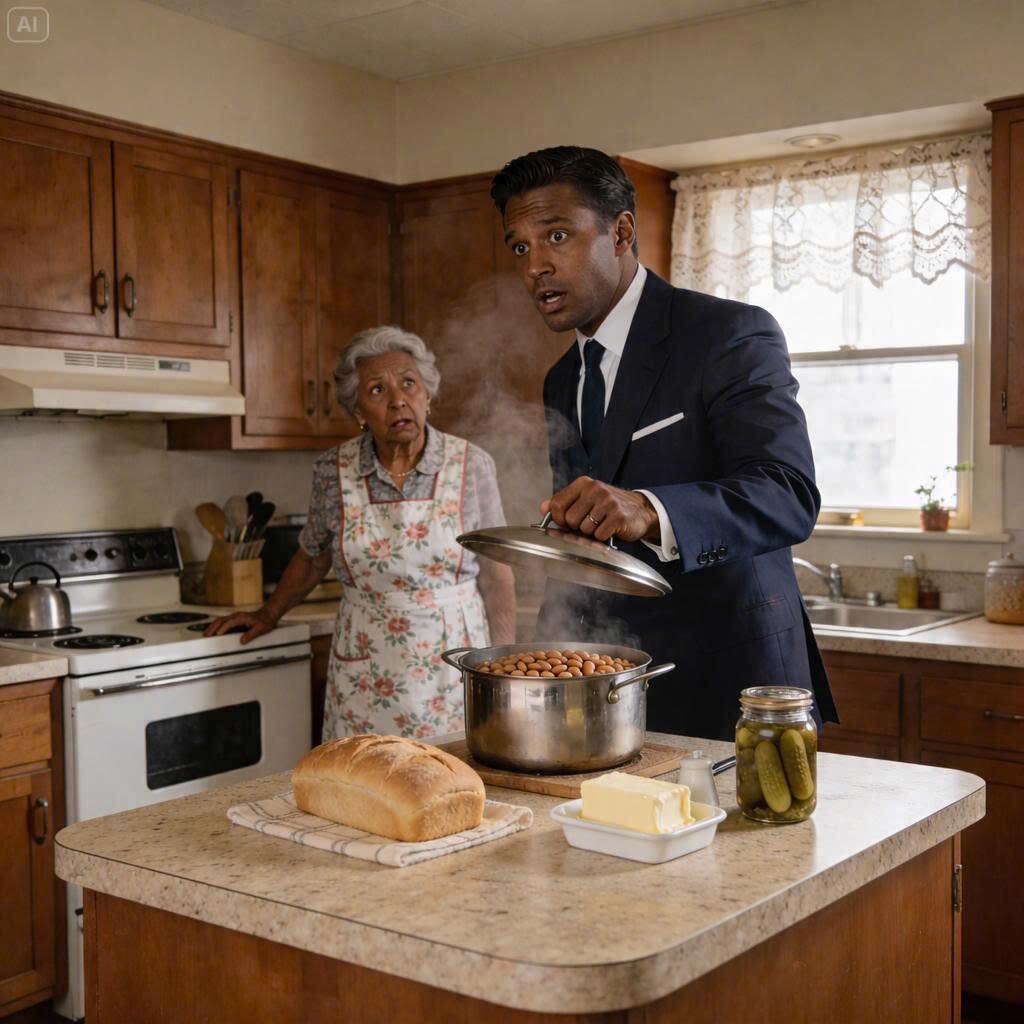
And when Tomás lifts the lid on the pot of beans that Christmas Day, he smiles in a different way.
“You made them,” he says.
“Of course I made them.”
“With chorizo too?”
You sniff. “Don’t act surprised. I have options now.”
The boys cheer like this is better than turkey. Maybe it is.
Verónica is not there. That absence is sad in ways you do not ignore, especially for the children. But absence is sometimes cleaner than poison at the table. Tomás has learned that now. So have you.
At some point during dinner, after the laughter and the tortillas and the second round of coffee, Santiago asks why everybody keeps saying this Christmas feels special. Mateo, with his mouth full, adds, “Yeah, it’s just beans.”
You and Tomás look at each other.
Then your son answers.
“It’s special,” he says slowly, “because last year I learned that sending money isn’t the same thing as showing love. And this year I’m here to prove I finally understood.”
The room goes quiet for one heartbeat.
Then Mateo shrugs and says, “Okay,” as if that is obvious and adults are dramatic. Everyone laughs, including you. Especially you.
Later that night, when the dishes are done and the children are asleep beneath the blinking tree and Father Benito has gone home with leftovers, you and Tomás sit in the kitchen with one lamp on. The same kitchen. The same table. The same house where truth once split Christmas open beside a pot of charity beans.
He wraps both hands around his coffee mug and says, “I still can’t forgive myself for not knowing.”
You look at him for a long moment.