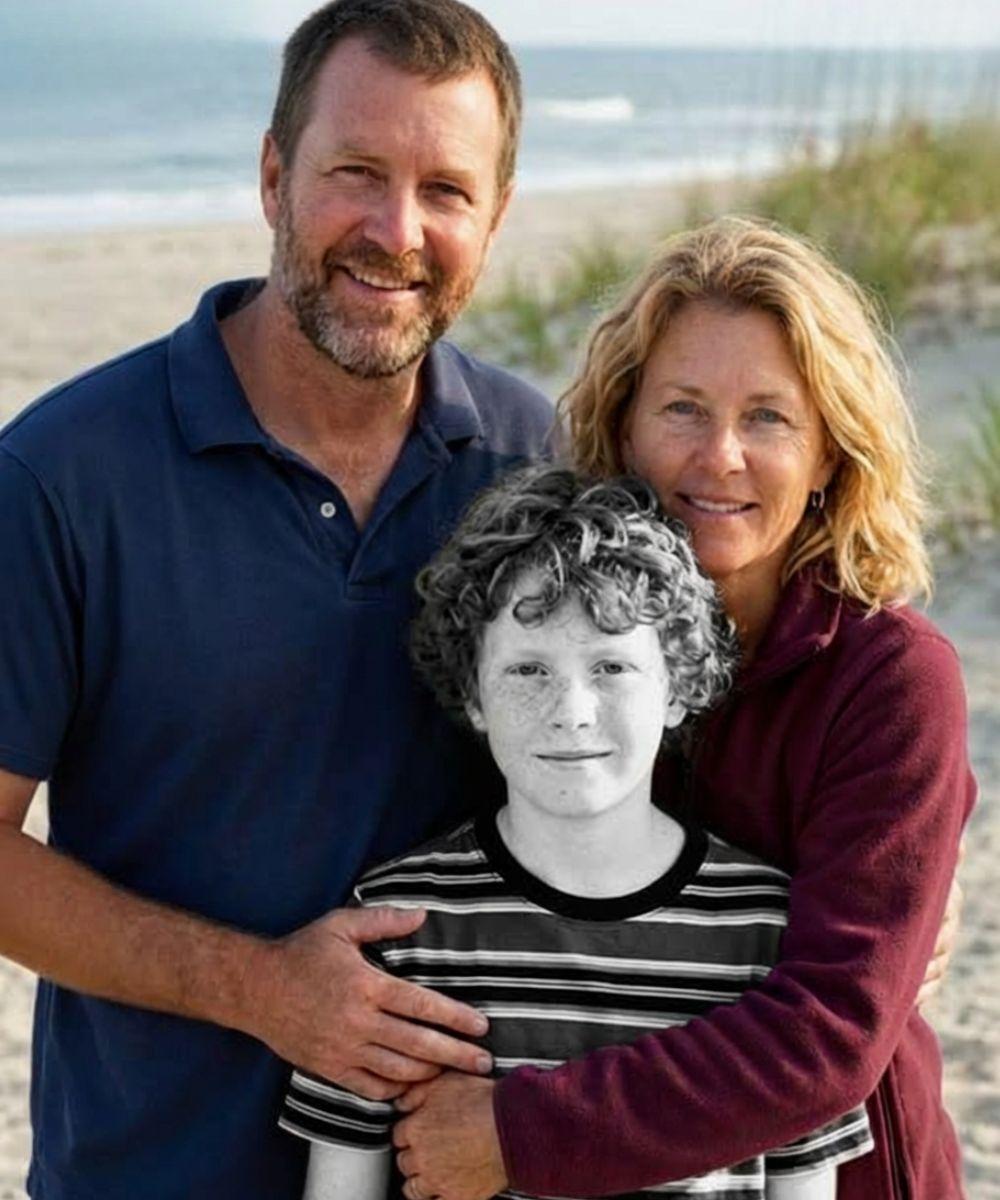
My boy had been gone for weeks. I hadn’t heard his voice or seen his face one last time—and suddenly, someone was telling me he still had something to say.
I pressed Owen’s blue camp shirt to my face when the phone rang.
It still carried a faint trace of his scent. I spent every day in his room now, surrounded by schoolbooks, sneakers, baseball cards—and a silence that didn’t feel empty so much as unbearably cruel.
Some mornings, I could still picture him in the kitchen, flipping a pancake too high and laughing when it landed half on the stove. That was the last morning I saw him alive.
He looked tired, though he smiled through it and told me not to worry when I asked if he was sleeping enough.
Owen had been battling cancer for two years. Charlie and I had built all our hope on the belief that he would survive. That’s why the lake didn’t just take our son—it took the future we had already begun imagining.
That morning, Owen left with Charlie and some friends for the lake house. By the afternoon, my husband called me in a voice I barely recognized. A storm had rolled in too quickly. Owen had gone into the water. The current carried him away.
Search teams looked for days, but they found nothing. Eventually, they used the words families are forced to accept when there is no closure.
Owen was declared gone.
No body. No final goodbye.
I broke completely. They admitted me for observation, and Charlie handled the funeral because I couldn’t even stand through it. When there’s no real farewell, grief never feels finished—it just keeps circling.
The phone kept ringing, pulling me back. I finally looked at the screen: Mrs. Dilmore.