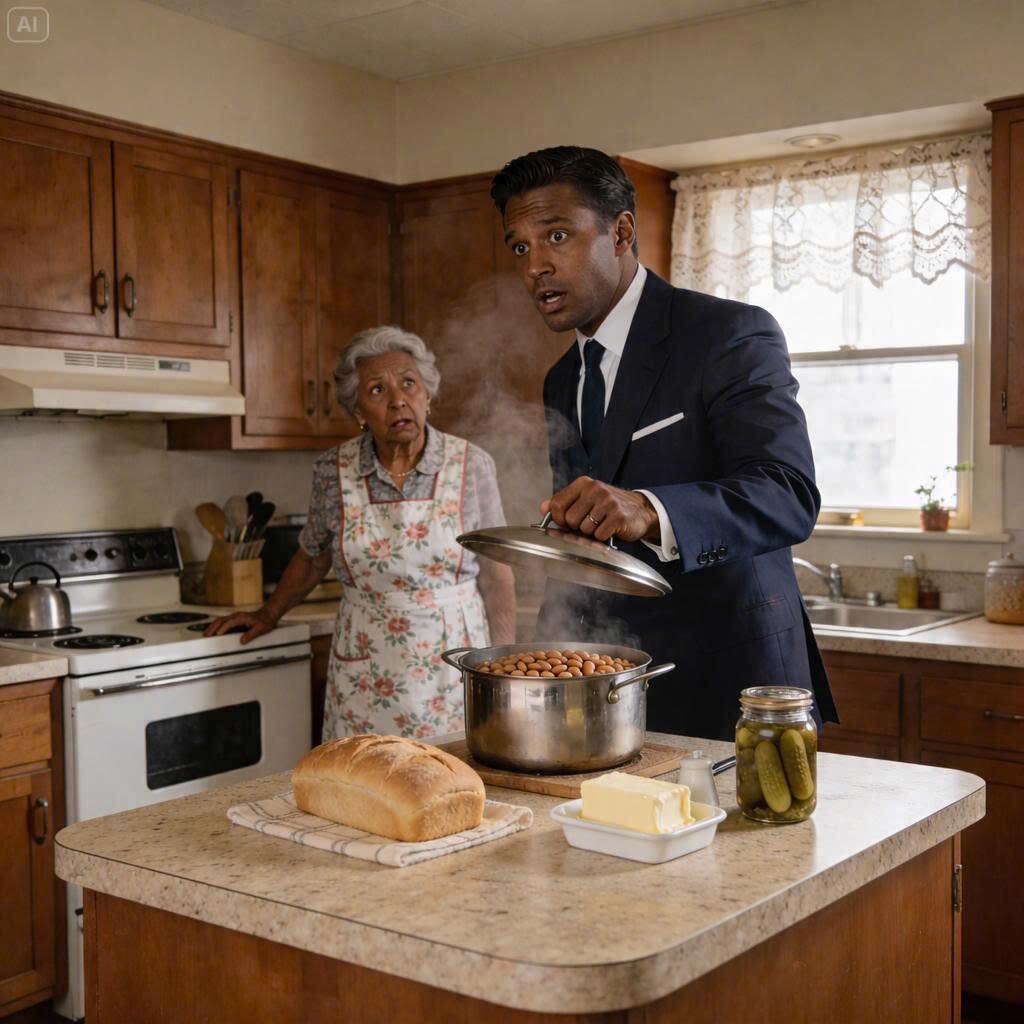
Verónica does not move.
“Right now.”
She gives a little laugh, brittle and offended. “You’re doing this here? In front of the kids?”
As if the children are the problem. As if the real indecency is not the theft. As if your cracked tile floor and your pot of beans have somehow embarrassed her more than her own actions. You see Tomás register that too, and something in his face hardens a shade darker.
“Santiago,” he says without taking his eyes off her, “take your brother to the living room.”
The older boy hesitates. He is old enough to know adults are lying when they get overly calm. Mateo clutches a toy car in one hand and looks from his father to his mother to you, confused and solemn. For a second, you almost tell Tomás to let them stay. Children should know what greed looks like before it puts on lipstick and enters their lives as family.
But Santiago is already guiding his little brother away.
The minute they are out of sight, Verónica drops the sweet, patient daughter-in-law voice you have heard for years and lets irritation slip free. “I did what I had to do,” she says. “You act like I bought myself a yacht. It was household money.”
Tomás stares at her.
“What did you just say?”
She lifts her chin, and there it is at last. Not panic. Defiance. The face of a woman who has been morally certain of her own entitlement for so long she no longer knows how monstrous she sounds outside the echo chamber of her own reasoning.
“I said,” she answers, sharper now, “that your mother didn’t need that much money every month. Be honest. What was she going to spend it on? Designer blankets? Imported cheese? She lives alone in a tiny house and barely leaves it. Meanwhile we have two children, social obligations, your parents’ anniversary donations, school trips—”
“My father is dead,” Tomás says.
The sentence lands like a slap.
Verónica blinks. “You know what I mean.”
“No,” he says, and now his voice has dropped low in a way that makes even you straighten. “I don’t think I do.”
You stand very still by the stove, one hand braced against the counter because the room has started to tilt slightly around the edges. The steam from the beans curls upward between the three of you like something alive, something witnessing. You think of all the months behind you: cutting pills in half, sleeping in socks and a sweater because you couldn’t run the heater all night, pretending the canned crackers from the parish were enough, telling yourself your son was busy but good.
Good. What a fragile thing that word is.
Tomás turns back to the table and opens the bank book again, not because he needs to see it but because he needs something concrete to keep from exploding. “How much?” he asks without looking up.
Verónica’s silence tells the truth before her mouth does.