Then he says, “Did I lose mine?”
You look around your kitchen.
The walls are patched now. A new heater hums quietly near the corner. The old floral tablecloth is still there because you like it, but it lies flatter now, not hiding a warped table edge because the carpenter fixed that too. In the living room, a bigger Christmas tree would have looked silly this year, but you already know next December the boys will insist on lights that blink and one of them will probably break an ornament and laugh too hard.
“No,” you say. “But you rented it out to comfort for a while.”
He laughs then, tired and grateful, and you hear in it the boy he used to be.
By spring, the divorce is public enough that there is no point hiding it. Verónica moves into a sleek apartment in Monterrey and starts over the way women like her always seem to—makeup perfect, statements measured, trying to turn theft into a sad difference of priorities. The court does not see it her way. Neither do the account records. She is ordered to repay what she can, though not even close to all of it. Some of the money is long gone into vacations, vanity, and the maintenance of an image she thought mattered more than your winter.
Tomás deposits the recovered amount into a new account in your name.
You make him sit at the bank with you while the manager explains every form, every password, every signature line. When the young woman behind the desk speaks only to him out of habit, you clear your throat and say, “Honey, the money is mine. Look at me.” Tomás nearly smiles into his coffee because at last, this part of the lesson has taken root.
The grandsons start visiting alone.
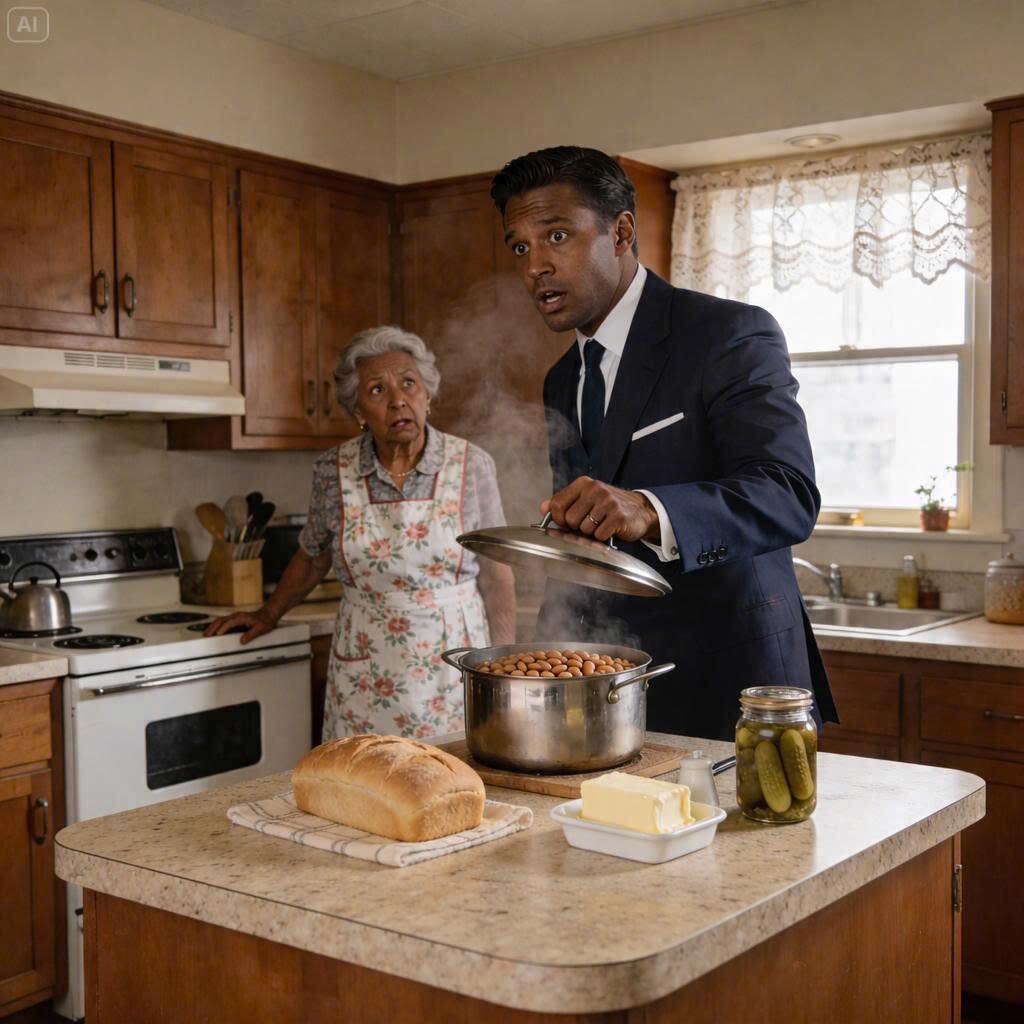
That changes everything in smaller, more important ways. Santiago learns to play cards with Father Benito and cheats terribly. Mateo decides your bean pot makes the best beans in Mexico and announces this like a judge issuing law. They pull weeds in the yard, help hang laundry, ask questions about their grandfather they were too little to ask before, and one rainy afternoon discover a tin box of old photos that turns your living room into a museum of who their father used to be.
There he is at nine, missing two front teeth, grinning over a birthday cake made from boxed mix and courage. There he is at twelve in a school uniform too short at the ankles because children grow before paychecks do. There he is at sixteen washing dishes at a local restaurant after class, already taller than his father, already looking toward some bigger horizon.
“Dad was poor?” Santiago asks in real shock.